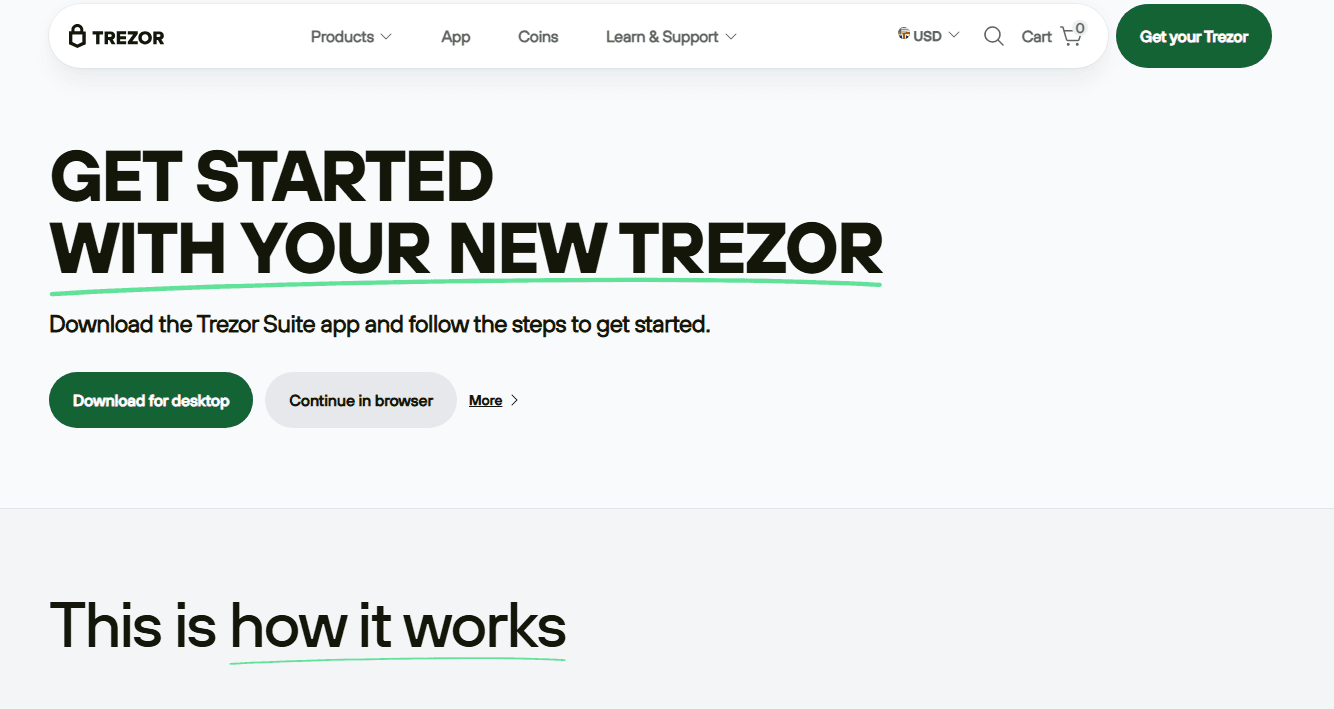
Trezor.io/start – The Ultimate Guide to Setting Up Your Trezor Wallet
With cryptocurrency becoming a significant part of modern finance, protecting your digital assets is more important than ever. Trezor.io/start is the official portal designed to help users safely set up their Trezor hardware wallet. It provides clear, step-by-step instructions to ensure your wallet is secure, authentic, and ready for managing crypto safely.
This article explains what Trezor.io/start is, how to set up your wallet, and best practices to keep your digital funds secure.
What Is Trezor.io/start?
Trezor.io/start is the official starting point for initializing your Trezor hardware wallet. It guides users through:
Authenticating the Trezor device
Installing or updating the firmware
Creating a new wallet or restoring an existing one
Setting up a PIN and recovery seed
Following this official process ensures your private keys remain offline, safeguarding your cryptocurrency from hackers and malware.
Why Use a Trezor Hardware Wallet?
Trezor wallets are globally recognized for their security. Unlike software wallets, they store private keys offline, protecting funds from online threats such as malware, phishing attacks, and hacking attempts.
All transactions require physical confirmation on the device, providing an extra layer of protection. This approach allows users to maintain full control of their cryptocurrency while minimizing the risk of unauthorized access.
Step 1: Access Trezor.io/start
Begin by visiting Trezor.io/start and connecting your hardware wallet to a computer or mobile device. The portal guides users through downloading Trezor Suite, the official companion software for managing cryptocurrencies securely.
The setup is intuitive and designed to accommodate both beginners and experienced users, ensuring a smooth and secure start.
Step 2: Verify Your Trezor Device
Authenticity verification is crucial. Trezor.io/start walks users through confirming that the device is genuine and running official firmware.
This step prevents counterfeit devices from compromising private keys and ensures that your cryptocurrency remains secure.
Step 3: Install or Update Firmware
Firmware is the software that operates your Trezor wallet. During setup, you may be prompted to install or update firmware. Updates enhance security, provide additional features, and support more cryptocurrencies.
All firmware installations must be approved directly on the device, preventing unauthorized software from being installed.
Step 4: Create a New Wallet
When creating a new wallet, the Trezor device generates a recovery seed—a unique set of words that acts as a backup. This recovery seed is essential for restoring your wallet if the device is lost, stolen, or damaged.
It is critical to write down the recovery seed and store it securely offline. Never save it digitally or share it with anyone.
Step 5: Restore an Existing Wallet
If you already have a recovery seed, Trezor.io/start guides you through restoring your wallet. Entering the recovery seed directly on the device keeps sensitive information offline and protected from potential threats.
Once restored, all your accounts, balances, and transaction history become accessible, allowing smooth management of your cryptocurrency.
Step 6: Set a PIN Code
During setup, users are prompted to create a PIN code. This PIN protects the device from unauthorized access. Multiple incorrect attempts trigger a security lock, making brute-force attacks nearly impossible.
Even if your Trezor device is lost or stolen, this PIN ensures that your funds remain safe.
Step 7: Manage Your Cryptocurrencies
After setup, users can manage multiple cryptocurrency accounts via Trezor Suite. Sending and receiving funds requires confirmation on the device, preventing unauthorized transactions.
The device also supports cryptocurrency-specific apps, enabling access to a wide range of digital assets while keeping private keys secure.
Step 8: Backup and Recovery
The recovery seed is vital for long-term wallet security. It allows users to restore access if the device is lost, stolen, or damaged. Trezor.io/start emphasizes keeping the recovery seed offline and never sharing it with anyone.
Even with the recovery seed, all important actions require confirmation on the device, maintaining maximum security.
Security Best Practices
Even with Trezor.io/start’s built-in security, users should follow these practices:
Store your recovery seed securely offline
Never share your PIN or recovery seed
Keep Trezor Suite and firmware up to date
Only use official Trezor.io/start resources
Following these steps ensures that your cryptocurrency remains fully protected.
Conclusion
Trezor.io/start is the safest way to set up a Trezor hardware wallet. By following the official setup instructions, users can ensure their device is genuine, secure, and ready to manage cryptocurrency with confidence.